

Access Audio Guide
Inside Footscray Hospital, COX Architecture and Billard Leece Partnership focused on creating calm, intuitive and light-filled interiors that support wellbeing and efficient care. From Hospital Street, COX Architecture’s Paul Curry describes how natural light, connection to the outside and movement pathways shape daily experiences for patients, staff and visitors.
Listen to Hospital Design–Interior
From the outside, the Hospital’s architecture is designed to feel open, connected and grounded in its landscaped setting. Paul outlines how the building form, façade and material palette has been shaped to reflect the vision of a welcoming, community-centred hospital.
A First Look at the People’s Hospital
The Community Open Day offers the public a first opportunity to step inside the new Footscray Hospital – truly the people’s hospital, shaped by and for Melbourne’s west.
Born from local advocacy and fundraising, the hospital represents a shared commitment to world-class healthcare delivered close to home.
Built to last, it redefines how tertiary healthcare facilities can support treatment, lifelong wellbeing, social connection and community resilience, without one compromising the other.
A Civic Heart for Footscray
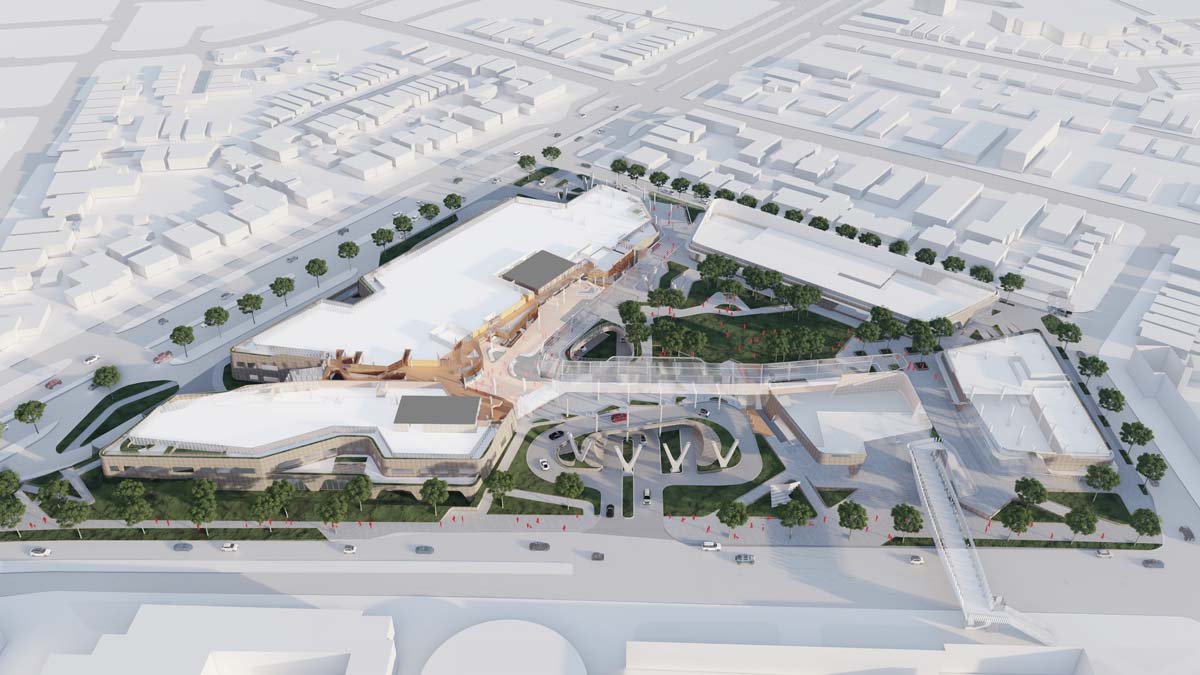
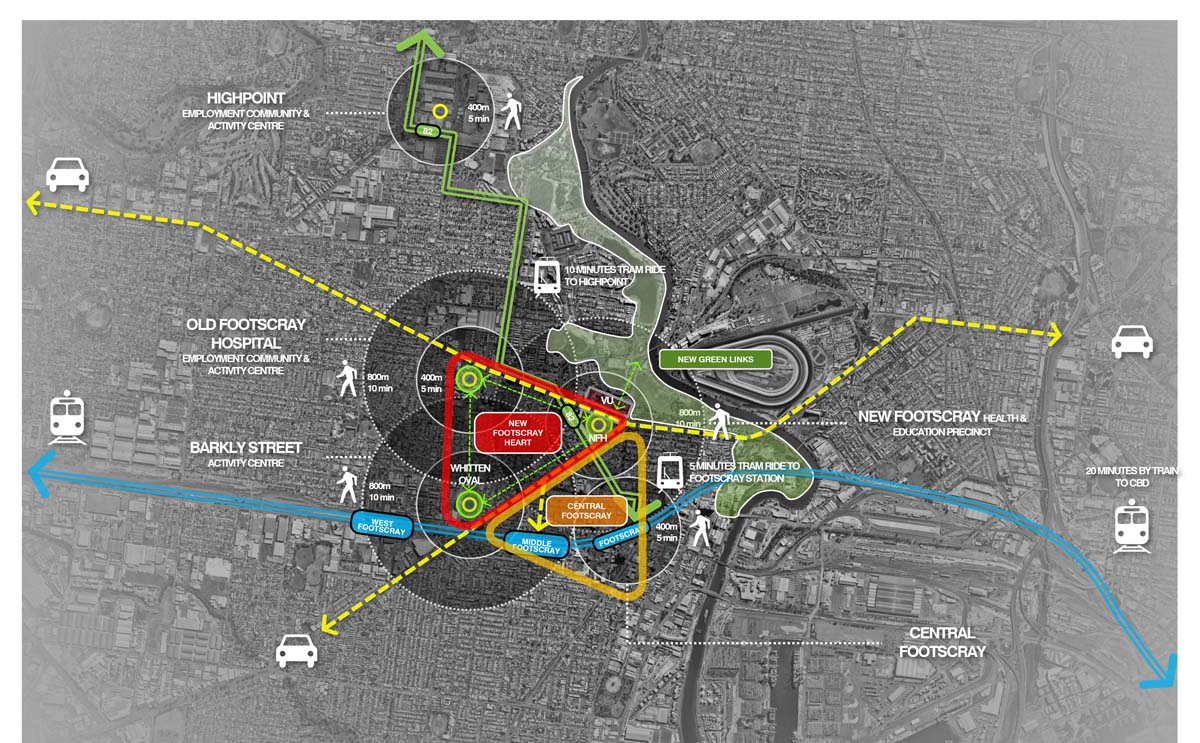
Designed as a campus rather than a single structure, the new Footscray Hospital is organised around five interconnected buildings and a central village green.
This landscape forms the civic heart of the precinct – anchoring the site and creating a clear point of orientation, gathering and connection.
More than a visual centrepiece, the village green is social infrastructure. Framed by retail and food and beverage uses, and stitched together by pedestrian links, it is designed for daily life.
Designing for Longevity and Wellbeing
Longevity underpins both the physical and social ambitions of the hospital. Beyond durability and adaptability, the design recognises that long-term health outcomes are shaped by environment, comfort and connection.
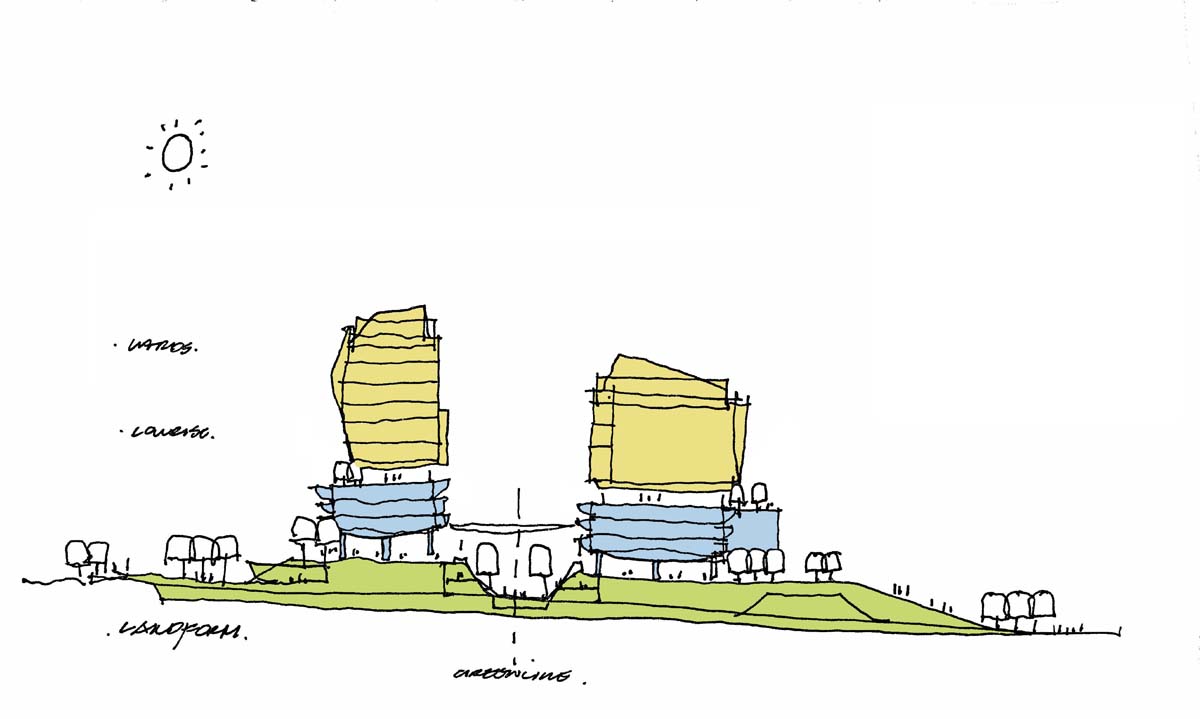
Public waiting areas are located within a generous internal ‘hospital street’ between the acute and sub-acute buildings, oriented towards the village green.
These spaces reduce stress, support intuitive wayfinding and reinforce a sense of place, rather than isolating patients and families in enclosed clinical zones. Throughout the hospital, views to landscape and access to outdoor spaces are embedded in the patient journey.
Human-Centred Architecture at Every Scale
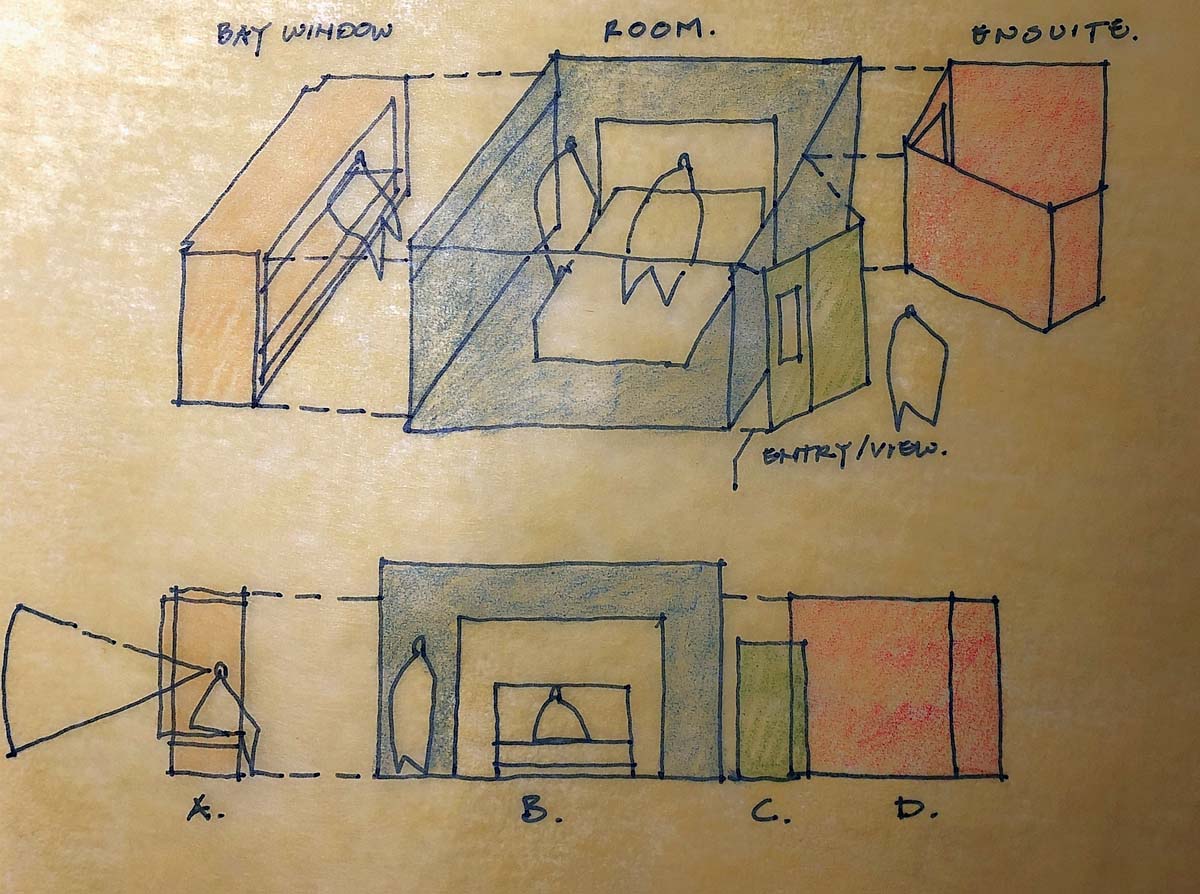
Human-centred design informs the hospital at every scale. Rounded building forms soften the precinct and improve accessibility, while the tiered façade transitions from a grounded, textured precast base to a glazed inpatient tower above – clearly expressing public, clinical and private zones.
Internally, natural materials bring warmth and continuity, including a sculptural timber ceiling that weaves through key public spaces. This element draws daylight deep into the building, creates visual connections between levels and transforms circulation spaces into places for pause and connection.
Built for Tomorrow
Sustainability is integral to the hospital’s long-term performance. The design incorporates an 840kW rooftop solar array and targets a minimum 5 Star Green Star rating, with aspirations for 6 Star certification.
Operational strategies prioritise reduced energy use, improved indoor environmental quality and future adaptability. In a national first, the hospital is also pursuing WELL Gold certification – reinforcing the idea that buildings designed for longevity must also support human health and wellbeing.
Designed during the COVID-19 pandemic, the hospital integrates flexible planning and adaptable systems that enable rapid response to future public health needs.
Together, these measures ensure the hospital is resilient, efficient and enduring, delivering lasting value to the community it serves.